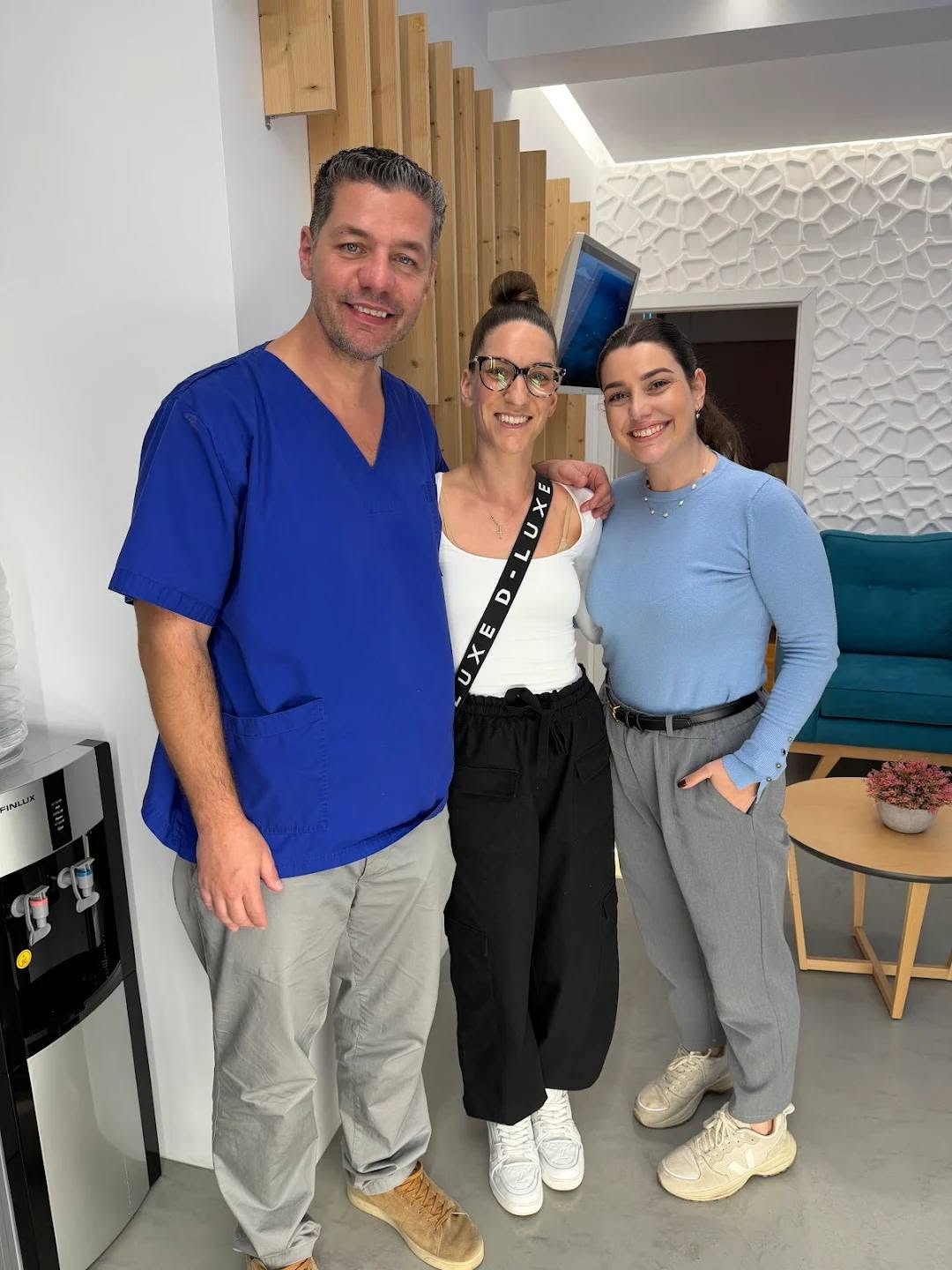
For years, she believed the pain she experienced was simply part of being a woman. Extremely painful periods, heavy bleeding, chronic pain and debilitating symptoms became something she learned to live with. Like many women with endometriosis, she was repeatedly dismissed, her symptoms attributed to other conditions, and the seriousness of her disease remained hidden for years.
By the time she received the correct diagnosis, endometriosis had silently spread throughout her body and damaged her left kidney, destroying 92% of its function. With no other option, she travelled thousands of miles from Australia to Greece for a complex 12-hour surgery performed by a multidisciplinary specialist team.
Endometriosis is a condition that affects women of all ages. How old were you when you had your first symptoms and what were the reactions of your friends and family when you mentioned the symptoms and pain?
Looking back, my symptoms started in my early teens. I remember having incredibly painful and extremely heavy periods that would leave me curled up in bed, but I genuinely believed that was simply part of being a woman.
As the years went on, the pain became more severe. During my periods I relied on painkillers just to get through the day and eventually I was taking them around the clock. What started as pain during my menstrual cycle gradually became chronic pain.
Not long after, I also began suffering from constant headaches and migraines. They became a daily part of my life and I found myself taking medication every single day just to function.
My family knew I suffered but none of us understood just how serious it was. Like so many women with endometriosis, I became very good at hiding my pain. I’d push through work, social events and everyday life because I didn’t want to let anyone down.
“I genuinely believed what I was experiencing was simply part of being a woman.”
I was told that painful periods were normal and because my periods had always been extremely heavy, I assumed that was normal too. That’s what I had always been told by others and even by doctors, so I never questioned it.
It wasn’t until years later that I realised the pain and heavy bleeding I’d been living with were never normal.
Many women go through multiple surgeries and wait years for a diagnosis. What is your story with endometriosis?
My journey to diagnosis took many years. Over the years I was told my symptoms could be IBS, Crohn’s disease, coeliac disease and even diverticulitis. I underwent countless tests, scans, specialist appointments and hospital admissions while my endometriosis continued to silently spread throughout my body.
By the time I was finally diagnosed, the disease had wrapped around my left ureter and silently destroyed 92% of my left kidney function. I had lived with ureteric stents for years while my condition continued to deteriorate.
Eventually my right kidney also began showing signs of damage and required a stent as well. After two hospital admissions and multiple stent changes in just four weeks, I realised I couldn’t keep waiting. I knew I needed help elsewhere.
After researching surgeons around the world, I made the difficult decision to travel from Australia to Greece to undergo complex excision surgery with a multidisciplinary team led by Dr Konstantinos Kyriakopoulos.
My surgery lasted almost 12 hours. During surgery they found Stage IV Deep Infiltrating Endometriosis with a frozen pelvis. I underwent a left nephrectomy, removal of my left ureter, bowel resection, appendectomy, removal of my left fallopian tube and extensive excision of endometriosis affecting multiple organs. Endometriosis was also found on my diaphragm.
“Although losing my kidney was devastating, the surgery gave me my life back.”
What were your symptoms and how and when did you realise you might have endometriosis?
Over the years my symptoms became overwhelming. I experienced severe pelvic pain, pain deep in my ovaries, lower back pain, chronic fatigue, daily headaches and migraines, nausea, vomiting, painful bowel movements, blood and mucus in my stools, constipation, painful intercourse and constant pressure through my pelvis and rectum.
As my kidneys became affected, I also developed hydronephrosis and spent years living with ureteric stents. They frequently became blocked, causing further complications. Living with stents also affected my bladder, making it difficult to empty properly.
“I honestly didn’t realise all of these symptoms could be connected until much later.”
Like many women, I believed they were separate issues. When doctors finally investigated further with specialised imaging, everything started to make sense.
As you know, endometriosis is not easily recognised by doctors and many women are advised to have a hysterectomy or become pregnant. What’s your story with doctors?
I have met many caring doctors throughout my journey, but unfortunately the healthcare system wasn’t equipped to deal with the complexity of my disease. For years my symptoms were treated individually instead of looking at the bigger picture.
I was told my symptoms were likely IBS or other gastrointestinal conditions and was prescribed different medications, hormonal treatments and pain relief. At one point I was medically induced into menopause for 12 months, which came with horrific side effects. I was also told that a hysterectomy was likely my best option despite wanting children.
“I often felt unheard, unseen and invalidated.”
What I needed wasn’t another temporary solution. I needed a multidisciplinary team experienced in complex endometriosis. Travelling overseas wasn’t an easy decision, but it became the decision that gave me hope.
Endometriosis is a whole-body condition affecting every aspect of life. How did it affect your life both personally and professionally?
Endometriosis affected absolutely everything. I spent years trying to run my hairdressing business while hiding my pain from clients. There were days I could barely stand, yet I continued working because I felt I had no choice.
It affected my marriage, friendships, my fertility journey, my confidence and my mental health.
“Everything revolved around my pain. It completely changed who I was.”
Living with endometriosis isn’t easy. The disease can take a toll emotionally. How did you feel when you realised you were finally having surgery with a specialist?
It felt like someone had finally thrown me a lifeline. After years of fighting to be believed, I finally felt heard.
I remember feeling relief, hope, gratitude, fear and sadness all at once. I knew how major the surgery would be but I also knew I couldn’t continue living the way I had been.
“Deep down I believed this surgery would change my life. Looking back now, it absolutely did.”
You had excision surgery with Dr Kyriakopoulos. How are you now after your surgery and how was your overall experience with our team and centre?
Travelling to Greece was one of the biggest decisions I’ve ever made and one I will never regret. From the very beginning I felt genuinely cared for. Dr Kyriakopoulos and the multidisciplinary team treated me like a person, not just another patient.
“Today I can honestly say I have my life back.”
For the first time in years I wake up without living in constant fear of my pain.
Although I lost my left kidney, I gained my future and I will always be incredibly grateful to the entire team.
If you could go back in time, what would you say to your younger self and what advice would you give someone newly diagnosed with endometriosis?
Your pain is not normal. Heavy bleeding is not something you just have to live with.
“Keep asking questions. Keep advocating for yourself. Don’t stop until someone listens.”
My journey has now led me to supporting women with endometriosis so they don’t have to feel as alone as I once did. Through The Endo Guide, I help women navigate every stage of their journey, from preparing for surgery and recovering afterwards to processing the emotional impact of chronic pain, medical trauma and major surgery. I also support women through nervous system regulation and emotional healing because I know firsthand that healing isn’t just physical.
If sharing my story helps even one woman feel heard, find the right specialist sooner or realise she isn’t alone, then everything I went through has found its purpose.
What is your message for doctors?
“Please listen to women.”
Too many women are told their pain is normal or that it’s simply part of being female.
By the time my disease was finally diagnosed, I had already lost 92% of my left kidney function and ultimately my left kidney.
“My hope is that no woman has to lose an organ before receiving the care she needed all along.”